
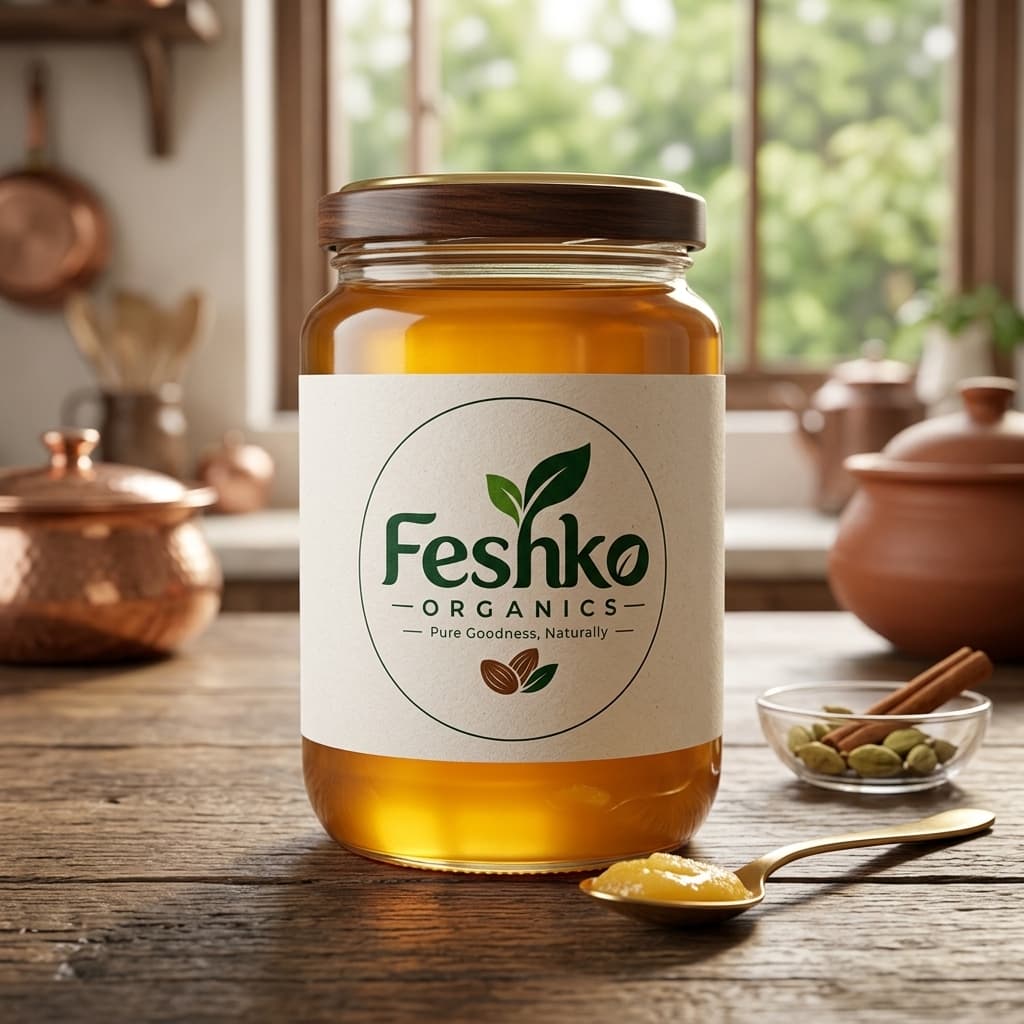
What Makes Ghee Special?
Unlike regular butter, ghee undergoes a clarification process that removes almost all water and lactose/casein content.
- High Smoke Point: Ghee has a very high smoke point (around 250°C / 485°F), making it extremely safe for high-heat cooking, frying, and tempering (Shorba/Tadka) without burning or creating harmful free radicals.
- Long Shelf Life: Because all water moisture and milk solids are removed during heating, pure ghee can stay fresh at room temperature for months without spoiling.
- Lactose-Friendly: Since the milk solids (casein and lactose) are strained out, many people with mild lactose or dairy sensitivity can digest ghee easily.
Health & Wellness Benefits
- Rich in Healthy Fats: Contains Short and Medium-Chain Fatty Acids (like Butyric Acid), which nourish the gut lining, support digestion, and reduce inflammation.
- Fat-Soluble Vitamins: Natural source of Vitamins A, E, D, and K, which help improve immunity, bone health, and skin texture.
- Natural Energy Source: Quickly converted by the liver into energy rather than being stored as body fat when consumed in moderation.
- Ayurvedic Medicinal Uses: Revered in Ayurveda as a natural vehicle (Anupana) to carry herbal nutrients deeper into tissues, as well as a natural remedy for joint lubrication and dry skin.
Popular Types of Ghee
- Cultured Ghee (মাখন থেকে তৈরি ঘি): Made traditionally by churning curd/yogurt to extract butter (Makhan), which is then clarified. It has a deeper aroma and higher probiotic enzymes.
- A2 Desi Cow Ghee (দেশি গরুর ঘি): Crafted specifically from the milk of indigenous cow breeds (containing A2 beta-casein protein), highly praised for its digestibility and superior quality.
Suggested Titles if Writing a Blog Post:
- Liquid Gold: The Culinary & Health Benefits of Pure Ghee
- Ghee vs. Butter: Why Clarified Butter is a Modern Superfood
- The Ayurvedic Secret: How Daily Ghee Nourishes Mind and Body